The Brightline Effect: Will the New Boca Raton Station Push Rents Higher Near Mizner Park?
- Maria V.
- May 5
- 18 min read
When the Brightline expanded with a stop at Boca Raton station in late 2022, it wasn’t just a transportation upgrade—it was a signal of transformation for downtown Boca Raton. Located just steps from Mizner Park, the station has quietly introduced the kind of “transit-oriented premium” that has reshaped rental markets in cities across the U.S.

A Prime Location Just Got More Connected
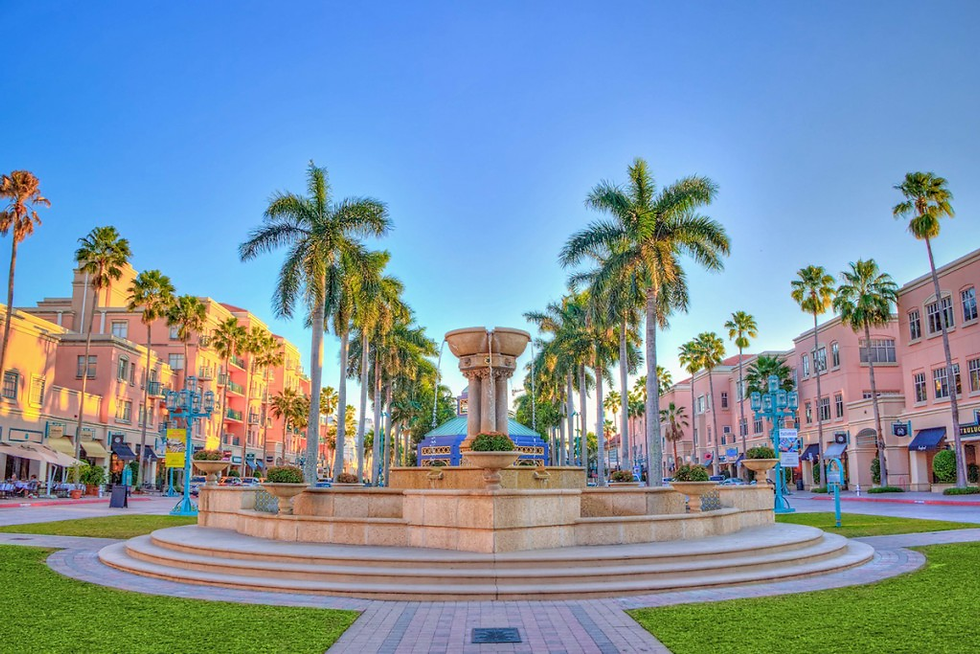
Long before high-speed rail entered the picture, Mizner Park had already established itself as one of South Florida’s most desirable places to live. With its blend of upscale apartments, curated retail, cultural attractions, and close proximity to the beach, the area offers a rare mix of lifestyle and convenience within a walkable downtown setting.
But the arrival of Brightline—and specifically the Brightline Boca Raton Station—has elevated that appeal even further.
From Local Hotspot to Regional Hub
The addition of direct rail connections to major cities like Miami, Fort Lauderdale, and Orlando has effectively repositioned Mizner Park from a local luxury enclave to a regional access point. Residents are no longer limited to Boca Raton for work, entertainment, or travel. Instead, they can move seamlessly between some of Florida’s most economically active and culturally vibrant cities—without relying on a car.
This shift has meaningful implications for who the area attracts.
Today, Mizner Park is increasingly appealing to:
Commuters who work in Miami or Fort Lauderdale but prefer a quieter, more refined home base
Remote professionals who value flexibility and need efficient access to airports and business hubs
Seasonal residents looking for a low-maintenance, walkable lifestyle without the hassle of driving
Why Connectivity Drives Demand
In real estate, convenience is one of the most powerful drivers of demand—and transit accessibility sits at the top of that hierarchy. When a neighborhood gains reliable, high-speed connections to major job centers and destinations, it often experiences what analysts call a “transit premium.”
In the case of Mizner Park, this effect is amplified by the area’s existing strengths. Unlike emerging neighborhoods that rely on transit to spark growth, Mizner Park was already a finished product: polished, desirable, and supply-constrained. The addition of Brightline doesn’t create demand from scratch—it intensifies it.
Walkability to the station is a key factor. Properties within a short radius of the Boca Raton station now offer a rare combination: luxury urban living with regional mobility. For renters and buyers alike, that translates into higher perceived value.
The Subtle Shift in Lifestyle
What’s changing isn’t just pricing—it’s how people use the neighborhood.
Living near Mizner Park now means:
Weekend trips to Miami without traffic
Easy access to Fort Lauderdale-Hollywood International Airport via rail connections
Day trips to Orlando that don’t require driving hours on I-95
This kind of flexibility reshapes daily life. It reduces friction, expands options, and makes the location feel more central—even though its geography hasn’t changed.
Mizner Park was already one of Boca Raton’s crown jewels. With Brightline in place, it has evolved into something more: a connected, transit-oriented destination that appeals to a broader—and often more mobile—type of resident.
And in real estate, when you combine an already desirable location with a major boost in accessibility, increased demand is almost inevitable.
What Rents Look Like Right Now
In an already high-demand market like Mizner Park, rental pricing reflects more than just square footage—it captures lifestyle, location, and increasingly, connectivity. Even without factoring in future growth from expanded transit access, the area is firmly positioned within the luxury rental tier of South Florida.
At present, average rents in and around Mizner Park typically range between $2,700 and $3,400+ per month, depending on the building, amenities, and unit type. For many renters, that places the neighborhood in direct competition with other upscale markets across South Florida.
A Closer Look at Pricing
One-bedroom apartments generally start around $2,500+ per month, with newer or recently renovated units commanding higher premiums
Two-bedroom and larger units frequently push past $3,500, especially in full-service buildings with amenities like pools, fitness centers, and concierge services
Premium units—including penthouses or residences with prime views—can exceed $4,000 per month, particularly in properties closest to retail, dining, and cultural venues
These figures already reflect the built-in advantages of the neighborhood: walkability, proximity to the beach, and a curated downtown environment that blends convenience with a polished, upscale atmosphere.
Where Transportation Fits In
The introduction of Brightline service via the nearby Brightline Boca Raton Station adds another layer to the pricing equation. While current rents are primarily driven by lifestyle appeal, transit upgrades tend to create incremental upward pressure over time.
This doesn’t usually happen overnight. Instead, pricing shifts gradually as:
New renters enter the market specifically for transit access
Existing residents place higher value on proximity to the station
Landlords adjust pricing based on increased demand and reduced vacancy
In a neighborhood like Mizner Park—where supply is already limited and demand is consistently strong—these changes can be more pronounced.
The Takeaway
Right now, Mizner Park sits comfortably in the luxury bracket, with pricing that aligns with its reputation as one of Boca Raton’s most desirable addresses. But with enhanced regional connectivity now in place, today’s rents may represent more of a baseline than a ceiling.
For renters considering the area, the key question isn’t just what it costs today—but how that cost might evolve as accessibility continues to reshape demand.
The “Transit Premium” Effect
In urban economics, the concept of a “transit premium” is well established: when a neighborhood gains access to fast, reliable transportation, property values and rents tend to rise. While Boca Raton is far smaller and less dense than cities like New York City or Chicago, the same underlying principle still applies—just on a more localized scale.
With the expansion of Brightline and the addition of the Brightline Boca Raton Station, areas surrounding Mizner Park are beginning to experience the early stages of this effect.
How the “Brightline Effect” Could Play Out
1. Increased Demand from New Renter Profiles
One of the most immediate and noticeable impacts of a new transit connection is the expansion of who considers a neighborhood livable. With the introduction of high-speed rail like Brightline, Boca Raton is no longer just a local or regional destination—it becomes part of a broader, connected corridor that includes major employment hubs like Miami and Fort Lauderdale.
For renters, this changes the equation entirely. Professionals who work in larger cities but prefer a quieter, more suburban lifestyle may now see Boca Raton as a realistic option. Instead of enduring long, unpredictable highway commutes, they can rely on a faster, more efficient rail connection. This convenience effectively shrinks perceived distance, making Boca Raton feel closer to job centers than it physically is.
As a result, the renter pool expands beyond the traditional local base. Young professionals, remote workers with hybrid schedules, and even seasonal residents may be drawn to the area. Many of these renters often have higher income levels or are willing to pay a premium for convenience and quality of life. That shift alone can create upward pressure on rental prices, especially in neighborhoods closest to the station.
Additionally, transit-oriented living tends to attract renters who prioritize walkability and lifestyle amenities. Areas near Mizner Park, already known for dining, retail, and entertainment, become even more appealing when paired with easy regional access. This combination can accelerate demand faster than supply can adjust—particularly in built-out areas where new development is limited.
Over time, this demand shift doesn’t just increase rents; it can also change the character of the rental market. Landlords may begin upgrading units, repositioning properties, or targeting different tenant profiles to match the evolving demand. In turn, this can lead to a gradual transformation of the neighborhood’s pricing structure and overall appeal.
In short, the “Brightline Effect” isn’t just about transportation—it’s about connectivity redefining desirability. And when more people want access to the same limited area, rising rents are often the natural outcome.

2. Higher Willingness to Pay for Convenience
Transit access does more than improve mobility—it fundamentally changes how renters value their time. In markets connected by high-speed rail like Brightline, proximity to a station becomes a lifestyle upgrade, not just a transportation perk. The ability to bypass traffic, reduce commute uncertainty, and eliminate the daily stress of driving can significantly increase what renters are willing to pay.
For many people, especially professionals commuting to nearby cities such as Miami or Fort Lauderdale, time is one of their most valuable resources. Living within walking distance of a Brightline station means reclaiming hours each week that would otherwise be lost in traffic. That time can be redirected toward work, leisure, or personal well-being—an exchange that many renters see as worth a higher monthly cost.
Convenience also extends beyond commuting. Easy access to transit reduces reliance on cars, which can mean fewer expenses related to fuel, parking, and maintenance. In walkable areas like those surrounding Mizner Park, renters can pair transit access with nearby dining, retail, and entertainment, creating a seamless daily routine. This kind of efficiency often commands a premium because it simplifies life in a way that suburban, car-dependent locations cannot.
Over time, this dynamic creates clear pricing tiers within the rental market. Properties closest to the station—typically within a comfortable walking radius—tend to achieve the highest rents. Units slightly farther away may still benefit, but at a more moderate level. This “distance-based pricing curve” is a common pattern in transit-oriented developments across the country.
Importantly, this willingness to pay is not just a short-term spike. As renters grow accustomed to the benefits of transit-oriented living, their expectations shift. Convenience becomes a standard rather than a luxury, reinforcing long-term rent premiums for well-located properties.
In essence, the Brightline effect transforms proximity into value. And when convenience directly translates into saved time and improved quality of life, renters are often willing to pay more to secure it.
3. Compression of Vacancy Rates
One of the quieter—but highly influential—outcomes of new transit infrastructure is its impact on vacancy rates. As accessibility becomes a top priority for renters, properties located near transit hubs like the Brightline station in Boca Raton tend to lease more quickly than comparable units farther away. This increased leasing velocity gradually compresses vacancy rates, tightening the overall rental market.
In areas like Mizner Park, where supply is already limited due to built-out land and zoning constraints, this effect can be even more pronounced. When more renters compete for a relatively fixed number of units, vacancies don’t just decrease—they can become consistently scarce. Properties that might have previously taken weeks to lease can be absorbed in days, particularly if they offer walkable access to transit and lifestyle amenities.
Lower vacancy rates shift the balance of power toward landlords. With fewer available units on the market at any given time, property owners gain greater confidence in setting and maintaining higher rents. Concessions—such as free months of rent or reduced deposits—also tend to disappear in these conditions, further increasing effective rental prices.
This dynamic can create a reinforcing cycle. Faster leasing reduces visible inventory, which increases urgency among prospective renters. That urgency, in turn, leads to quicker decision-making and a higher likelihood of accepting asking prices without negotiation. Over time, this pattern supports steady rent growth, even in the absence of major new development.
Additionally, compressed vacancy rates can influence investor behavior. Strong occupancy levels signal a healthy, in-demand market, attracting further investment into nearby properties. While new development may eventually help ease supply constraints, it often lags behind demand—especially in desirable, centrally located areas like those surrounding Mizner Park.
In the long run, the “Brightline Effect” doesn’t just bring more renters into the market—it accelerates how quickly they secure housing. And when units are consistently filled with minimal downtime, the result is a tighter, more competitive rental environment where prices are more resilient and upward pressure is sustained.

4. Gradual Price Segmentation
As the benefits of transit access begin to influence renter behavior, not all properties experience the impact equally. Instead of a uniform rise in rental prices across an entire neighborhood, a more nuanced pattern tends to emerge—one defined by gradual price segmentation based on proximity, walkability, and perceived convenience.
Properties located closest to the Brightline station, particularly those within easy walking distance, are typically the first to capture the strongest rent premiums. These buildings can market themselves as “transit-oriented,” offering a level of accessibility that directly translates into daily time savings and lifestyle efficiency. For many renters, especially commuters, this immediate proximity justifies paying higher rents.
Just a few blocks farther out, however, the dynamic begins to shift. While these properties still benefit from being near a transit hub, the convenience factor is slightly reduced—perhaps requiring a bike ride, short drive, or longer walk to access the station. As a result, rent growth in these areas tends to be more moderate. They remain desirable, but they don’t command the same premium as truly walkable units.
This creates a clear pricing gradient within the market. At the top tier are properties with direct, seamless access to transit and nearby amenities like Mizner Park. In the middle tier are units that are “close enough” to benefit from the area’s appeal but lack immediate accessibility. Further out, properties may see only minimal indirect effects, influenced more by overall market growth than by transit proximity itself.
Over time, this segmentation becomes more defined and more predictable. Renters begin to self-select based on their priorities—those who value convenience above all gravitate toward higher-priced, transit-adjacent units, while more budget-conscious renters opt for locations slightly farther away. This natural sorting reinforces the pricing tiers and helps sustain them over the long term.
For landlords and investors, understanding this gradient is key. Small differences in location—sometimes just a few minutes of walking distance—can translate into meaningful differences in rental income and asset value. In a market shaped by transit, proximity isn’t just a feature; it becomes a pricing strategy.
Ultimately, the “Brightline Effect” doesn’t lift all properties equally—it reshapes the market into layers, where access defines value and distance determines price.
5. Long-Term Value Reinforcement
While some real estate trends come and go with market cycles, infrastructure investments tend to operate on a completely different timeline. Projects like Brightline don’t just influence short-term demand—they reshape how a city functions for decades. This is where the most powerful aspect of the “Brightline Effect” emerges: long-term value reinforcement.
Transit infrastructure changes behavior. Once residents begin to rely on fast, predictable rail connections, those patterns become embedded in daily life. Commuting habits shift, business activity adapts, and new development often follows the path of accessibility. Over time, areas with strong transit connectivity transition from being “convenient” to being essential.
For rental markets, this creates a compounding effect. Early increases in demand and rent premiums near transit hubs are only the beginning. As more people prioritize connected locations, and as surrounding amenities continue to grow, the perceived value of being near transit strengthens rather than fades. What starts as a competitive advantage evolves into a baseline expectation.
In places like Boca Raton—particularly near lifestyle centers such as Mizner Park—this effect can be especially durable. The combination of walkability, entertainment, and regional connectivity creates a self-reinforcing ecosystem. New businesses are more likely to open nearby, additional residential projects may target the area, and public and private investment continues to cluster around the transit corridor.
Importantly, this kind of value growth is not linear—it builds over time. Each improvement in infrastructure, each new development, and each increase in demand adds another layer of desirability. Unlike speculative price spikes, which can correct quickly, transit-driven value tends to be more stable because it is rooted in tangible, functional benefits.
For landlords and investors, this means that proximity to transit is not just a short-term pricing lever—it’s a long-term positioning strategy. Properties that are well-located today are likely to remain relevant and competitive well into the future, even as broader market conditions fluctuate.
Ultimately, the “Brightline Effect” is less about immediate change and more about lasting transformation. Connectivity becomes part of the city’s identity, and with it, the value of being “well-connected” continues to grow—year after year.

Appeal to Investors and Developers
Transit doesn’t just attract renters—it draws the attention of capital. One of the most predictable outcomes of new rail infrastructure is increased interest from investors and developers looking to position themselves in areas with long-term growth potential. In the case of Boca Raton, the arrival of Brightline signals more than improved mobility; it highlights the area as a candidate for future density, mixed-use development, and sustained economic activity.
Transit-accessible locations tend to check several key boxes for developers. They offer built-in demand drivers, support higher-density projects, and align with broader urban planning trends that favor walkability and reduced car dependence. As a result, land near transit stations often becomes more valuable—not just for what exists today, but for what can be built in the future.
Around Mizner Park and the Brightline station, early discussions and proposals for mixed-use developments point to this shift. Developers are particularly drawn to the opportunity to combine residential, retail, office, and hospitality components into a single, integrated environment. These types of projects are designed to maximize both land use and lifestyle appeal, creating destinations where people can live, work, and socialize without needing to travel far.
For investors, this signals long-term upside. Transit-oriented developments (TODs) often benefit from stronger occupancy rates, higher rent growth, and greater resilience during market downturns. The presence of reliable transportation infrastructure reduces risk by ensuring continued accessibility and relevance, even as surrounding market conditions evolve.
There’s also a timing advantage. Markets like Boca Raton—where transit expansion is relatively recent—can present early-stage opportunities compared to more mature, fully built-out transit corridors. Investors who enter during this phase may benefit from appreciation as the area develops, demand increases, and new projects come online.
However, this growing interest can also have broader implications. As more capital flows into transit-adjacent areas, competition for land intensifies, potentially driving up acquisition costs and accelerating redevelopment. Over time, this can lead to a transformation of the local landscape, with older or lower-density properties being replaced by larger, more modern projects.
In essence, the “Brightline Effect” extends beyond renters—it reshapes the investment narrative of an area. What was once a desirable lifestyle location becomes a strategic development zone, where connectivity, density, and long-term growth intersect.
Lifestyle Premium Expansion
Mizner Park has long held a distinct advantage in Boca Raton: true walkability in a region where car dependency is the norm. Residents can already step বাইরে their door and access restaurants, cafés, retail, and entertainment within minutes. That alone places the area in a premium category within South Florida’s rental landscape.
But with the addition of Brightline, that premium is evolving into something more powerful—walkable plus regionally connected. This combination is rare, and it significantly expands how renters perceive value.
Walkability delivers convenience at the neighborhood level. Regional rail connectivity, on the other hand, extends that convenience across cities. Together, they create a layered lifestyle: residents can enjoy a pedestrian-friendly daily routine while also having seamless access to major destinations like Miami and Fort Lauderdale without relying on a car. This dual benefit transforms Mizner Park from a local hotspot into part of a broader, interconnected network.
For renters, this means more than just easier commuting. It introduces flexibility into how they live. A resident might work remotely most days, take Brightline for occasional in-office meetings, and use it for weekend trips—all without changing where they live. That kind of optionality adds a new dimension to lifestyle value, one that traditional suburban or even purely urban locations may struggle to match.
As a result, the “lifestyle premium” associated with Mizner Park doesn’t just increase—it expands. It now appeals to a wider range of renter profiles, including those who prioritize experiences, mobility, and efficiency over square footage alone. In practical terms, this often translates into a greater willingness to pay for properties that offer both immediate walkability and long-distance connectivity.
There’s also a competitive implication. In South Florida, many neighborhoods can offer either walkability or transit access—but rarely both at a high level. Mizner Park’s ability to deliver this combined experience positions it in a unique tier, where demand is not only strong but also more resilient to shifts in broader market conditions.
Over time, this expanded lifestyle premium can influence everything from rent levels to tenant expectations. Properties in the area may increasingly market not just their amenities, but their connectivity—highlighting how easily residents can move between cities while maintaining a high-quality local lifestyle.
Ultimately, the “Brightline Effect” doesn’t just make Mizner Park more accessible—it makes it more complete. And in real estate, places that offer both convenience and connection tend to command lasting value.

A Smaller Market, Same Dynamics
Boca Raton may not rival the scale or complexity of major metropolitan transit systems, but when it comes to real estate behavior, size doesn’t change the underlying dynamics. The same forces that drive value in cities like New York or Chicago—access, convenience, and flexibility—are just as relevant in smaller, high-quality markets. The difference is not in whether these forces apply, but in how quickly and visibly they take effect.
At its core, transit-driven value is rooted in human behavior. Renters and buyers consistently place a premium on locations that simplify their lives. The ability to move efficiently between cities, reduce commute stress, and maintain optionality in where they work or spend time carries measurable economic value—regardless of market size. In Boca Raton, Brightline introduces exactly that: a new layer of connectivity that enhances how the city fits into a broader regional lifestyle.
What makes this particularly impactful in a place like Mizner Park is that demand already exists. This isn’t an emerging neighborhood in need of discovery—it’s a well-established destination known for its walkability, dining, retail, and overall quality of life. In this context, the arrival of high-speed rail doesn’t need to create interest from the ground up. Instead, it acts as an amplifier.
Rather than asking, “Will people want to live here?” the more relevant question becomes, “How much more competitive does this location become?” For many renters, the answer is clear: a desirable neighborhood with added regional access becomes significantly more compelling. This added convenience can tip decision-making in favor of Boca Raton over other nearby markets that lack similar transit options.
Another important factor is optionality. Even for residents who don’t plan to use Brightline daily, the ability to do so holds value. It creates flexibility—whether for occasional commuting, weekend travel, or future job changes. This kind of built-in adaptability is increasingly important in a world where work patterns and lifestyle preferences continue to evolve.
In smaller markets, these shifts can feel more concentrated. Because there are fewer comparable neighborhoods and limited inventory in prime locations, even modest increases in demand can have an outsized impact on pricing and competition. The result is a familiar pattern seen in larger cities—just operating on a more contained stage.
Ultimately, Boca Raton demonstrates that you don’t need a massive transit network to see meaningful real estate effects. The principles remain the same: when access improves, desirability rises. And in a neighborhood like Mizner Park, where the foundation was already strong, the “Brightline Effect” doesn’t start the story—it accelerates it.
The “transit premium” near Mizner Park is unlikely to be as dramatic as in larger cities, but it doesn’t have to be to matter. Even modest increases in demand can push rents higher in a tight, upscale market.
For renters and investors alike, the takeaway is clear: when connectivity improves in an already desirable location, pricing rarely stands still.
Will Rents Actually Go Higher?
The short answer is yes—but not in the dramatic, overnight way some might expect.
In markets like Boca Raton, rent growth tends to be steady and controlled rather than explosive. Even with the arrival of Brightline and the nearby Brightline Boca Raton Station, the fundamentals of the local housing market point toward gradual upward pressure—not sudden spikes.
Why Growth Will Likely Be Measured
Unlike rapidly expanding urban cores, Boca Raton operates within a more constrained framework:
Zoning limitations restrict how much new housing can be added, particularly in desirable downtown areas near Mizner Park
A controlled development pipeline means fewer large-scale apartment projects flooding the market at once
A luxury-leaning renter base already places pricing near the upper end, leaving less room for sharp jumps
Because of these factors, the “transit premium” introduced by Brightline is more likely to reinforce existing pricing trends rather than disrupt them.
What Renters May Notice Over Time
While the changes may be subtle at first, they can become more noticeable over the next few years:
1. Faster Growth Near the Station Properties within walking distance of the Brightline station are likely to see rents increase at a slightly faster pace than inland areas. Even a small difference in annual growth can compound over time.
2. A Clear Walkability Premium Units that offer easy, car-free access to transit, dining, and retail will continue to command higher prices. In a place like Mizner Park, where walkability is already a major draw, this premium becomes even more pronounced.
3. Increased Competition for Quality Units Newer or recently renovated buildings—especially those marketing convenience and connectivity—may lease more quickly and at stronger price points. This can create a tighter market for renters seeking modern amenities.
A Slow Burn, Not a Surge
It’s important to understand that Boca Raton isn’t trying to become Miami or Fort Lauderdale. Its appeal lies in balance: upscale living, relative calm, and controlled growth.
That’s exactly why rent increases here tend to follow a “slow burn” pattern. Instead of sharp spikes, the market experiences consistent upward movement driven by sustained demand and limited supply.
Yes, rents near Mizner Park are likely to rise—but gradually. The addition of Brightline strengthens the area’s appeal, attracts a broader pool of renters, and reinforces long-term demand.
For renters, that means today’s pricing may feel high—but over time, it could look like the early stage of a longer upward trend rather than the peak.
The arrival of Brightline has strengthened Mizner Park’s position as one of South Florida’s most desirable rental zones. While it may not trigger dramatic overnight increases, it reinforces a clear trend:
Convenience drives value—and Mizner Park just became more convenient than ever.
For renters, that means one thing:If you want to live near the station, you’re not just paying for the apartment—you’re paying for access.
Sources
Brightline Official Website – Routes, stations, and service overview
City of Boca Raton – Downtown and transportation development updates
Urban Land Institute – Research on transit-oriented development and property value impacts
Florida Department of Transportation – Regional mobility and infrastructure reports
Zillow Rental Market Data – Boca Raton, FL
Apartments.com – Mizner Park and Downtown Boca Raton listings
Brightline Official Website – Station locations and service expansion
City of Boca Raton – Housing and downtown development insights
American Public Transportation Association (APTA) – Public Transportation Fact Book
National Association of Realtors (NAR) – The Value of Transit Proximity
Florida East Coast Industries – Brightline Economic Impact Reports
Urban Land Institute (ULI) – Emerging Trends in Real Estate
American Public Transportation Association (APTA) – The Value of Public Transportation
National Association of Realtors (NAR) – Community & Transportation Preferences Survey
Urban Land Institute (ULI) – Infrastructure and Real Estate Value
Florida East Coast Industries – Brightline Transit-Oriented Development Insights
U.S. Census Bureau – Housing Vacancy Survey (HVS)
National Multifamily Housing Council (NMHC) – Apartment Market Trends Report
Urban Land Institute (ULI) – Transit-Oriented Development and Real Estate Performance
Florida East Coast Industries – Brightline Economic Impact & Development Reports
Urban Land Institute (ULI) – Transit-Oriented Development and Value Capture
American Public Transportation Association (APTA) – Real Estate Impacts of Transit Access
National Association of Realtors (NAR) – The Economic Benefits of Walkable Communities
Florida East Coast Industries – Brightline and Transit-Oriented Development Reports
Urban Land Institute – Infrastructure and Long-Term Real Estate Value
American Public Transportation Association – Economic Impact of Public Transportation Investment
National Association of Realtors – Transit and Property Value Studies
Florida East Coast Industries – Brightline Economic and Development Reports
Urban Land Institute – Transit-Oriented Development and Market Dynamics
American Public Transportation Association – Public Transportation and Property Value
National Association of Realtors – Community & Transportation Preferences Survey
Florida East Coast Industries – Brightline Economic Impact Reports
Urban Land Institute – Reports on transit-oriented development and property value trends
National Bureau of Economic Research – Studies on transportation access and housing prices
American Public Transportation Association – Research on economic impacts of transit infrastructure
Brightline – Service expansion and station data
City of Boca Raton – Downtown development and planning resources
Urban Land Institute – Emerging Trends in Real Estate
American Public Transportation Association – Transit-Oriented Development and Economic Impact
National Multifamily Housing Council – Development and Investment Trends Report
Florida East Coast Industries – Brightline Development and Economic Impact Reports
Urban Land Institute – Walkability, Connectivity, and Real Estate Value
American Public Transportation Association – Public Transportation and Quality of Life Benefits
National Association of Realtors – Community & Transportation Preferences Survey
Florida East Coast Industries – Brightline and Transit-Oriented Development Insights
Boca Raton station overview and opening details
Rental price data for Mizner Park apartments
Background on Mizner Park and its development
Brightline service expansion and regional connectivity


Comments